






 8 Min
8 Min
 Zuletzt aktualisiert am 23.09.2026
Miracle cure or just hocus-pocus? Anyone who hasn't yet delved deeply into the subject... Creatine and its effects Anyone who's ever looked into this might be wondering. After all, not every fitness trend is worth copying. Quite the opposite, in fact: we strongly advise against some of the ones you've seen. And what about the effects of creatine? Fact or myth? We at Vetain have done the research and compiled all the relevant information on this topic for you here. Enjoy reading!
Why is everyone talking about the effects of creatine?
Creatine is an organic acid that your body produces naturally, primarily in the liver, kidneys, and pancreas. Learn more in our article "What is creatine?"
Creatine's main job? The most well-known effect of creatine is related to the muscles. It supports the rapid release of energy by being stored in your muscles as creatine phosphate. So, when you really push yourself during a workout, creatine steps in to replenish your energy reserves. This makes it a particularly interesting supplement for short, intense bursts of activity like weight training or sprints.
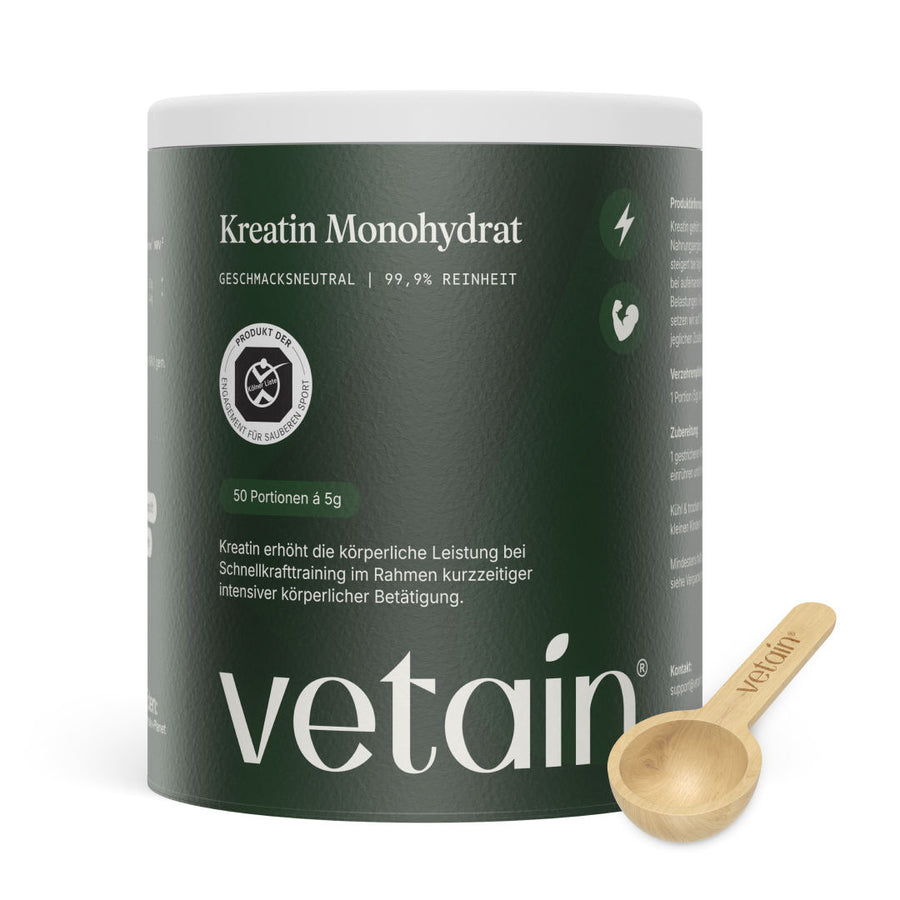
It's no wonder, then, that creatine – and especially creatine – is so popular. Creatine Monohydrate, As you can find it in our shop, it's considered one of the most popular supplements. It's also scientifically better researched than most other supplements. For comparison, there are far fewer studies and unequivocally proven effects on the body for BCAAs, fat burners, and detox products – yet it's taken more often than creatine.
Did you know that?? Your body produces about 1-2 grams of creatine daily, mainly in the liver, kidneys and pancreas.
What are the differences in effect between different forms of creatine?
Creatine monohydrate is the classic: effective, well-researched, and cost-effective. Creatine HCL scores points with better solubility and fewer side effects like bloating (which, incidentally, is also easily resolved with creatine monohydrate). Creatine ethyl ester promises faster absorption but offers fewer advantages. Creatine magnesium chelate combines creatine with magnesium – unnecessary if you already have a magnesium complex like the one from our [product name/brand name]. Vitamin bundle you take with you.
%-product_content-%
This is exactly how creatine works in the body
To help you understand just how remarkable the effects of creatine truly are, let's take a closer look at its various mechanisms of action – and where in the body they occur. Even if a substance is very well researched, you should always be fully informed about it before testing it yourself. Incidentally, the following effects attributed to creatine are not just a collection of personal anecdotes, but facts based on scientific evidence.
The effects of creatine in training
Creatine contributes – and for most people this will be the main reason for taking it – to increasing physical performance during short-term, high-intensity exercise (from 3 g/day). Simply put, it increases the production of ATP (adenosine triphosphate), the primary energy source for intense exertion such as strength training.With more ATP, you can train harder and longer, which directly promotes muscle growth. Studies have also shown that creatine can lead to water retention in muscles, which can affect weight but also make muscles appear fuller. No wonder it's so popular with athletes, right?
Does creatine have an effect on the brain and mind?
Studies are currently investigating these connections – until there are definitive findings, we can't say anything more. But we'll keep you updated!
Many hope that creatine will help them lose weight.
Creatine itself doesn't burn fat, but: Increased strength and endurance allow for more intense workouts, which in turn boost calorie expenditure. Even though we're not fans of diets, as they're now viewed rather negatively and as "unhealthy," we're not against a leaner look. From now on, though, only with creatine!
How quickly does creatine work and how long does the effect last?
Depending on how you want to structure your training and your goals, you can start with a loading phase. This means that for the first five to seven days, you take about 20 grams daily, divided into several doses, as this allows you to replenish your muscles' creatine stores more quickly. You'll notice the first effects after just a few days. If you instead take the daily maintenance dose of 3 to 5 grams, it will take about two to three weeks for your stores to be optimally filled and for the full effect to become apparent.
And how long does the effect last when you stop taking creatine? The stored creatine reserves are slowly broken down over four to six weeks, and the body returns to its normal creatine levels. This means you won't lose your strength or muscle mass overnight, but the extra performance boost will gradually disappear. And the good news is that the extra muscle you gained from creatine supplementation won't disappear if you continue training!
Whether or not there's a charging phase: In the long run, the effects change only marginally. The main difference is made when you want to replenish your storage as quickly as possible.
Did you know that?? Creatine is one of the most researched supplements in the world. Studies date back to the 1990s.
Creatine side effects: What you should know
Creatine has a reputation for being a safe and well-tolerated supplement – and rightly so. Nevertheless, there are a few points you should keep in mind. For one, there are rumors that creatine could damage the liver or heart. However, scientific studies show that no negative effects on the liver or heart are to be expected in healthy individuals – even with long-term use. It is important, however, to adhere to the recommended dosage of 3 to 5 grams daily and not to consistently overdose. People with pre-existing kidney or liver conditions should, as a precaution, discuss creatine supplementation with a doctor before taking it.
Some people may experience stomach problems as an unwanted side effect of creatine. Sometimes, taking it can cause bloating and diarrhea. However, these symptoms mainly occur when too much creatine is taken or too little water is consumed.This is because creatine attracts more water and stores it in the muscles; therefore, the need for water is increased.
Creatine for everyone: women, men and specific target groups
And of course, you can't delve into the effects of creatine without asking yourself: Does creatine work the same for everyone? And the short and sweet answer is: Yes. Creatine works the same for everyone.
And many women love creatine. Why? One of the main reasons lies in the natural hormonal balance: women naturally have less testosterone, which plays a crucial role in muscle growth and strength in men. Creatine can counteract this by increasing energy production in the muscles. But don't worry: this doesn't mean that your testosterone levels will rise because of creatine – neither for women nor for men, sorry!
The myth that creatine makes "bulky muscles" is nonsense!
Groups of people who should definitely discuss creatine supplementation with their doctor include:
-
People with kidney problems (e.g., renal insufficiency)
-
People with liver disease
-
Pregnant and breastfeeding women
-
Adolescents and children (due to their developing metabolism)
-
People with cardiovascular diseases
-
People with gastrointestinal problems (e.g., irritable bowel syndrome)
-
People with autoimmune diseases (e.g., lupus, multiple sclerosis)
-
People who are taking medication (e.g., diuretics or blood pressure medication)
-
Older adults (individual effect varies)
-
People with rare metabolic disorders (e.g., creatine transporter disorder)
Understood?
The effect of creatine powder vs. other forms
Creatine powder is the most popular and cost-effective way to take the supplement. It's easy to dose and mix into drinks. Other forms, such as creatine HCL or capsules, promise advantages like better solubility, but are usually more expensive. However, if you frequently experience stomach aches from creatine, capsules might be a good option. They have an advantage that powder lacks: they dissolve in the intestines, not in the stomach. This often prevents digestive issues.
Did you know that?? Creatine is also found in food! Meat and fish in particular are rich in it – vegetarians and vegans therefore often benefit especially from supplementation.
Taking creatine correctly: summary tips and tricks
The question of whether creatine should be taken before or after training is a recurring topic of debate. However, studies show that the timing is less crucial – the main thing is that you take creatine regularly. Many prefer to take it after training, as the muscles are then particularly receptive. Many also love it as a booster – simply for the feeling it provides, as it doesn't actually deliver the same kind of boost as a typical pre-workout.
-
The ideal daily dosage is 3–5 grams, but at least 3.5 g, regardless of gender or training level.
-
A loading phase with higher doses can replenish creatine stores faster, but is not absolutely necessary.
-
Important: Drink plenty of fluids! Creatine draws water into the cells, and adequate hydration helps to avoid side effects such as dehydration or stomach problems.
-
In combination with other supplements such as protein powder Creatine can be particularly effective when combined with carbohydrates.
-
Carbohydrates increase insulin secretion, which promotes creatine uptake in the muscles.
-
A smart routine that incorporates creatine makes all the difference – this is how you get the most out of your training!
-
You can add creatine powder to everything from smoothies to pudding, oatmeal or pancakes. Recipes mix.
Our best tips for taking the medication can be found in our article: When to take creatine?
%-split_content-%
Myth vs. Truth: FAQs
My creatine has expired: is it still usable or should I dispose of it?
Expired creatine is not automatically unusable. As long as it has been stored in a dry and cool place, it often remains stable beyond the best-before date. Effects of creatine However, creatine can lose its effectiveness if exposed to moisture, as it then converts into creatinine – a less effective substance. Visible clumps or an odd odor? It's best to discard it! Otherwise, the effectiveness should not be diminished even with expired creatine.
Creatine monohydrate or alternatives: Which is better?
Creatine monohydrate remains the number one choice: affordable, effective, and thoroughly researched. Creatine HCL, Kre-Alkalyn, or ethyl esters may be more soluble or gentler on sensitive stomachs, but often offer no significant advantage. For most people, monohydrate is the best option, as long as you ensure good quality.
Creatine makes you fat, right?
No, creatine doesn't make you fat – at least not in the sense of fat gain. However, it can lead to a temporary weight gain because it draws water into the muscle cells. This results in fuller muscles and improved performance. Fat deposits remain unaffected as long as you continue to eat a balanced diet.
I'm taking creatine, but I'm not noticing any effect. Why?
Not everyone reacts to creatine in the same way. "Non-responders" often already have high natural creatine stores in their muscles, so additional intake has little effect. The solution: take creatine in combination with carbohydrates, as this can improve absorption. Regular training is also crucial to fully realize its benefits.