






 8 Min
8 Min
 Zuletzt aktualisiert am 23.09.2026

You want to improve your omega-3 intake but face the classic question: Fish oil or algae oil? Both provide the important omega-3 fatty acids EPA and DHA, but the differences are greater than expected. While fish oil was considered the gold standard for decades, algae oil is increasingly conquering the market - especially among health-conscious people who value animal welfare and purity. In this article, you will learn how the two sources differ and what advantages and disadvantages they have.
P.S.: Simply take our test to find out which source of omega-3 is best suited to you.
Your knowledge to go: Fish oil or algae oil?
-
The most important point first: Both provide the important omega-3 fatty acids EPA and DHA.
-
Algae oil is the original source: Fish obtain their omega-3 fatty acids mainly through algae.
-
Algae oil scores points for purity and is vegan. However, it is often more expensive and less extensively researched.
-
Fish oil is often less expensive and well researched, but it is not vegan and may also contain contaminants.
-
The decision whether fish oil or algae oil is better suited to you depends on your personal preferences and diet.
Fish oil: The classic source of omega-3
Omega-3 fish oil is obtained from fatty cold-water fish such as salmon, mackerel, and herring. These fish store omega-3 fatty acids in their tissue - but they do not produce them themselves. They obtain EPA and DHA through their diet: algae and smaller organisms that, in turn, feed on algae themselves. This means that fish oil is a secondary source of omega-3, essentially "second-hand omega-3." Unfortunately, this kind of second hand is not really sustainable: To obtain omega-3 from fish, they have to be caught (the issue of overfishing the oceans) and therefore killed.
Benefits of fish oil
-
High EPA and DHA content: Fish oil capsules provide both fatty acids in a natural, balanced ratio, with slightly more EPA than DHA. An important point when deciding whether fish oil or algae oil is better suited to you.
-
Years of research: Omega-3 fish oil has been the subject of scientific studies for decades and is therefore already well researched.
-
Proven effectiveness: The effects of omega-3 from fish oil have been demonstrated by numerous studies.
-
Less expensive: In a direct price comparison, fish oil capsules are often significantly less expensive than algal oil products.
Disadvantages of fish oil
-
Risk of heavy metals and environmental toxins: Although elaborate purification processes are used in the production of fish oil, residues of contaminants from fish tissue may still remain in the fish oil.
-
Fishy aftertaste: Fish oil is known for its rather strong taste, which can cause increased belching in sensitive people. Especially if you do not like the taste of fish, this is naturally unpleasant and can quickly answer the question of fish oil or algal oil.
-
Overfishing of the oceans and sustainability issues: Fish stocks are under pressure worldwide. The production of fish oil not only further depletes fish stocks but also destroys animal habitats.
-
Not suitable for a vegan diet or in cases of intolerance: Fish oil supplements are not an option for people with a fish allergy or those following a vegetarian or vegan diet. Fish oil or algal oil for vegetarians? Clearly algal oil!
Algal oil: The plant-based alternative is becoming increasingly popular
Algal oil is obtained from microalgae - the original source of omega-3, as already explained. Omega-3 from algae is therefore the direct source of omega-3, without the “detour” through fish - a decisive advantage when choosing between fish oil and algal oil.
This makes algal oil much more animal-friendly. In addition, algae are usually cultivated in controlled tanks rather than taken from open seas. This also helps protect the habitats of small marine organisms.
Advantages of algal oil
-
Lower exposure to contaminants: Due to controlled cultivation in tanks, exposure to heavy metals and microplastics is extremely low.
-
Protecting fish: No fish are killed to produce algal oil capsules.
-
Direct source of EPA & DHA: Algal oil is the only direct source of plant-based EPA and DHA. For many people, this is a decisive factor when considering whether fish oil or algal oil is better.
-
More pleasant taste: High-quality omega-3 algal oil has a milder, slightly algal taste without a fishy aftertaste.
-
Additional valuable nutrients: Algal oil contains additional nutrients such as carotenoids.
%-product_content-%
Disadvantages of algal oil
-
Higher price: Algal oil is significantly more expensive than fish oil. So if your budget is tight, the choice between fish oil and algal oil might come down to the less expensive fish oil.
-
May taste like algae: Some products have a slightly algae-like taste.
-
May contain less EPA and DHA in some cases: The EPA content is often lower than in fish oil. However, many manufacturers now compensate for this.
-
Fewer studies so far: Research on algae oil is growing, but is not yet as extensive as research on fish oil. This does not mean that it is unsafe - it is more about detailed research. The safety and efficacy of algae oil have already been demonstrated, so don't worry. Find out everything omega-3 fatty acids can do in our article: What is omega-3 good for?
Direct comparison: Which is better, fish oil or algae oil?
When deciding between fish oil and algae oil, a direct comparison of the most important criteria can help:
| Criterion | Fish oil | Algae oil |
|---|---|---|
| Purity | Variable | Very high |
| Ethics | Difficult | Good |
| Vegan | No | Yes |
| Tolerance | Fishy taste | Algae taste |
| Price | Cheaper | More expensive |
| Research | Extensive | Growing |
| Allergy-friendly | No | Yes |
So the question "Which omega-3 is best?" cannot be answered in general - it depends entirely on your preferences, lifestyle, and values. Here is a little guidance for you:
Algae oil omega-3 capsules for vegans: Algae oil is the only direct source of EPA and DHA for vegans and vegetarians. Plant-based sources such as flaxseed oil, walnuts, or rapeseed contain only alpha-linolenic acid, which the body can convert only to a limited extent. So if you follow an animal-free diet, algae oil is probably the better choice for you.
Algae oil capsules for conscious consumers: If you want to protect fish stocks, algae oil is the consistent choice.
Special recommendations for pregnant and breastfeeding women: DHA is particularly important for the child's development. Algae oil, with its high DHA content and purity, can be a good choice here - but be sure to talk to your doctor.
Fish oil omega-3 capsules on a tight budget: If your budget is tight and you have no vegan preference, high-quality fish oil from sustainably caught wild fish may be an option.
So, have you decided which product suits you better? If not, our "Fish oil or algae oil" test might help. Give it a try now.
Test: Is fish oil or algae oil better for you?
Answer these 5 quick questions and get an initial assessment of which product suits you better:
-
What is your predominant diet?
A) Vegan or vegetarian
B) Omnivorous (eating everything) -
Is animal welfare important to you?
A) Yes, I want to help protect the oceans and fish stocks
B) Not so much -
Which do you find more pleasant: a fishy aftertaste or an algae aftertaste?
A) An algae aftertaste is more pleasant for me
B) A fishy aftertaste is more pleasant for me -
Do you have any allergies or intolerances to fish or seafood?
A) Yes, I am sensitive to them
B) No, I don't have any allergies -
How important are the purity and freedom from contaminants of your omega-3 supplement to you?
A) Very important, I want products that are as free from contaminants as possible
B) Not so much
Results:
If most of your answers are A, algae oil may be the better choice for you - vegan, pure, and free from a fishy taste.
If most of your answers are B, fish oil may suit your preferences better, especially if you value a lower price.
%-split_content-%
What should you look for when buying?
Whether you choose fish oil or algae oil - good quality is crucial!
How to recognize good omega-3:
-
Look for a high EPA and DHA content per serving - each daily dose should contain at least 250 mg of EPA & DHA. More information: How much omega-3 per day?
-
Transparent origin: Reputable manufacturers state exactly where their omega-3 comes from.
-
Independent laboratory testing ensures safety and purity.
-
Look for a low TOTOX value: The TOTOX value indicates how fresh and unoxidized the oil is. The lower the value, the better - values below 10 are recommended. Vetain's algae oil capsules have a TOTOX value of 7.9.
%-product_content-%
So remember: Whether fish or algae, whether omega-3 capsules (vegan or not) or omega-3 oil, always make sure it is of good quality.
Why is algae oil becoming increasingly popular? | A look into the future
The demand for omega-3 algae oil capsules is growing steadily. But why is that? For one thing, more and more people are paying attention to what dietary supplements contain and how they work in the body. So it has long been about more than just “supplementing something for peace of mind”; more and more people genuinely want to use high-quality products .
In addition, there are of course more and more vegetarians and vegans. And they usually choose - surprise - algae oil.
Research into algae-based omega-3 is also growing. This gives algae oil more attention and credibility. As research expands and production efficiency improves, prices could even fall in the future. Win-win!
Algae oil is the star, especially for a young, health-conscious target audience: purity, tolerability, and ethical production all in one.
And who knows, perhaps in a few years the question "fish oil or algae oil?" will no longer arise at all.
Conclusion: Choosing between fish oil and algae oil
The most important takeaway: Both sources provide the omega-3 fatty acids EPA and DHA that your body needs. So fish oil and algae oil can both contribute to your omega-3 intake. The decision therefore depends more on personal preferences, your values, and your lifestyle. Which omega-3 capsules are the best? Good question. Ultimately, the best omega-3 is the one you take regularly.
If you:
-
value plant-based products
-
are sensitive to a fishy taste
-
have allergies or intolerances
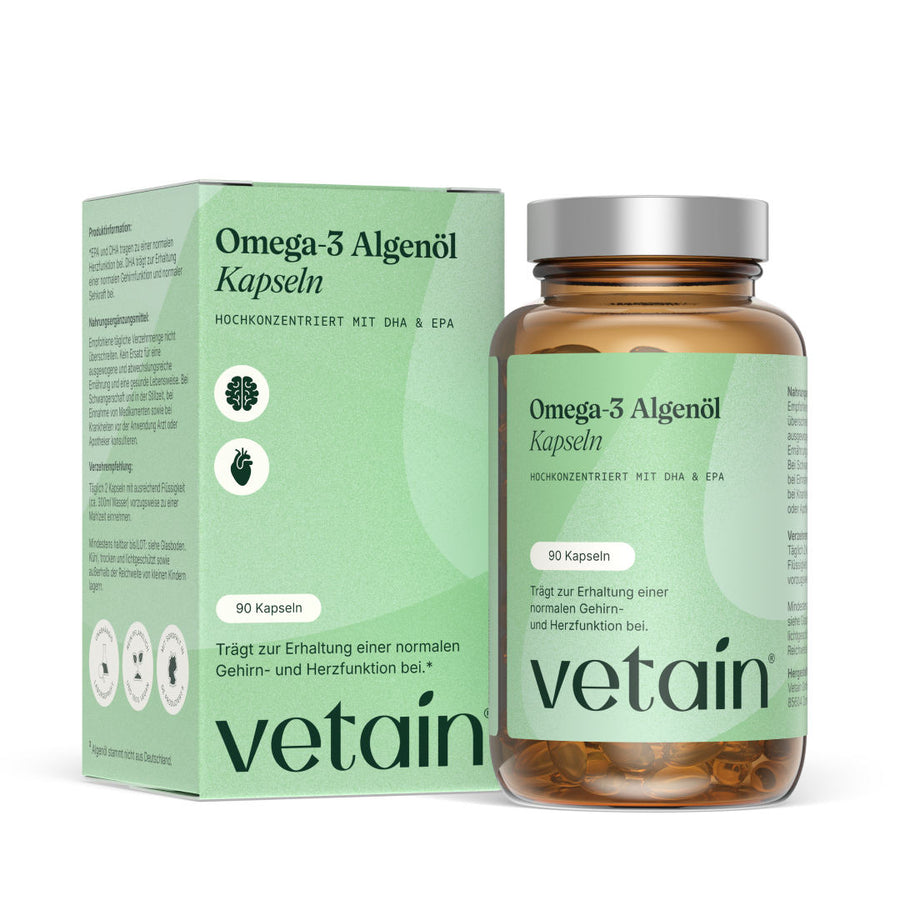
Could algae oil products be right for you? Why not take a look at our Omega-3 capsules (vegan) in our shop. And if you're interested in which foods contain omega-3 fatty acids, take a look at our article on omega-3 sources.
Do you have any questions? Then feel free to send us an email – we look forward to hearing from you! :)
Literature & Sources
-
Arterburn, L. M., et al. (2008). Algal-oil capsules and cooked salmon: nutritionally equivalent sources of docosahexaenoic acid. Journal of the American Dietetic Association.
-
Lane, K., et al. (2022). Bioavailability and potential uses of vegetarian sources of omega-3 fatty acids: a review of the literature. Critical Reviews in Food Science and Nutrition.
-
Doughman, S. D., et al. (2007). Omega-3 fatty acids for nutrition and medicine: considering microalgae oil as a vegetarian source of EPA and DHA. Current Diabetes Reviews.
-
Ryan, A. S., et al. (2015). Bioequivalence of docosahexaenoic acid from different algal oils in capsules and in a DHA-fortified food. Lipids in Health and Disease.
-
Lenihan-Geels, G., et al. (2013). Alternative sources of omega-3 fats: can we find a sustainable substitute for fish? Nutrients.