






 8 Min
8 Min
 Zuletzt aktualisiert am 23.09.2026
The fitness industry has been arguing about "Vegan vs. Whey" for years. Of course, protein powder is also a good thing. Whey advocates say: Bioavailability is better. Vegans say: That's not true at all; besides, vegan protein is better tolerated by many people. Whey fans respond with a shrug: No, we've found otherwise. In the end, everyone is free to choose their own protein powder - but is there really such a thing as better and worse here? We at Vetain have taken the trouble to give you an overview. First of all: no shame - it doesn't matter which protein anyone chooses. We're trying to remain impartial vegan protein powder vs. whey to assess. Let's see how that works! We'll start right at the beginning...
... God said: Let there be protein powder.
By the way: When we wanted to speak to God so that he could finally settle the dispute over "vegan protein powder vs. whey," we ended up in a telephone queue and are still waiting for a response from support. We promise: Should you ever contact us, we'll get back to you.
Whey vs. Vegan Protein - what is protein, anyway?
Proteins are macronutrients and therefore part of a balanced diet. Active people in particular and those with an active lifestyle usually make sure to meet their protein needs - even though this would actually be important for everyone. Think about it yourself: How much protein do you really consume? Some active people consume up to 2 grams per kilogram of body weight. That's quite a lot, especially for a society that lives on bread and pasta. Therefore, a normal diet is usually not enough, which is why many people turn to protein powder.
Two of the most popular options are whey protein and vegan protein powder. While whey is obtained from cow's milk and is considered particularly high-quality, vegan protein powders are made from plant-based sources such as peas, rice, or hemp. These two options differ in several aspects, including biological value, amino acid profile, digestibility, and environmental footprint. Let's take a look at both options!
More details about whey protein
Whey protein, also known as milk whey protein, is obtained from cow's milk. It is produced as a byproduct of cheesemaking and is then filtered in several steps to obtain the purest possible protein concentrate. Due to its high biological value, whey protein is considered one of the most popular sources of protein for active people. There are various forms of whey protein, which differ in their degree of purity. Whey concentrate contains around 70 to 80 percent protein, while whey isolate achieves a protein content of over 90 percent is achieved and it contains almost no lactose. The purest form is whey hydrolysate, which has already been broken down enzymatically and can therefore be digested particularly quickly. This makes whey a preferred choice after training.
However, whey protein can be problematic for people with lactose intolerance or a milk protein allergy and can cause digestive issues. Many also criticize the fact that animal welfare is not a priority. And, of course, the quality of whey protein is limited by the quality of the animal husbandry itself.
Since animal welfare is suffering greatly nowadays and antibiotics, factory farming, and other practices are used very frequently, it is highly questionable how many truly healthy farm animals are still left on this planet. Let’s take a look at vegan protein powder.
What is vegan protein powder, and is it better?
Vegan protein powder is obtained from plant sources and is an alternative to animal protein. The most common ingredients are pea, rice, hemp, or soy protein. These plant proteins have the advantage of being lactose-free and can therefore often also be tolerated by specific groups, such as people with lactose intolerance. However, each plant protein source has its own strengths and weaknesses. The biggest criticism: No single plant protein has a complete amino acid profile. Let’s take a quick detour into the …
… amino acid profile
An amino acid profile describes the composition of a protein in terms of the amino acids it contains. There are 20 proteinogenic amino acids in total, nine of which are essential. Essential amino acids, also known as EAAs (leucine, isoleucine, valine, methionine, lysine, phenylalanine, threonine, tryptophan, and histidine), must be obtained through the diet because the body cannot produce them itself. Branched-chain amino acids (BCAAs) are particularly popular in sports: leucine, isoleucine, and valine. A complete amino acid profile ensures better protein utilization.
Back to the topic: vegan protein powder vs. whey.
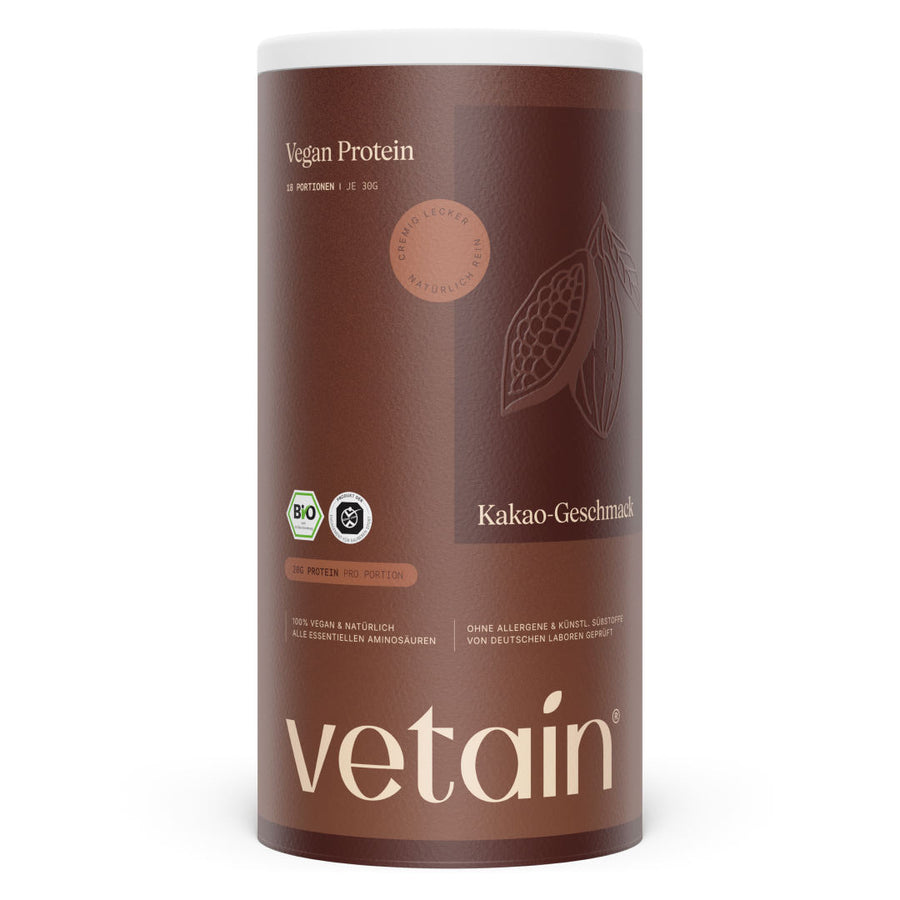
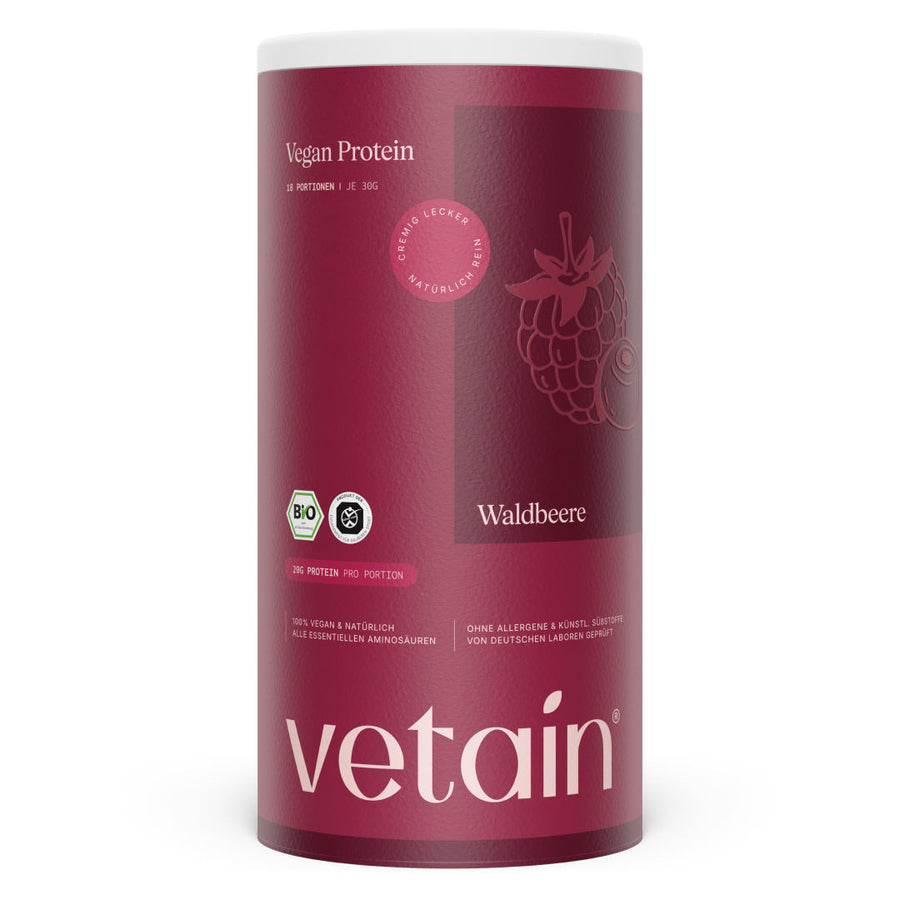
As described, no vegan protein has a complete amino acid profile. Pea protein has a relatively good profile and is particularly high in lysine. Rice protein, on the other hand, is rich in sulfur-containing amino acids such as methionine, but contains little lysine. Hemp protein scores points for its healthy fatty acids, but has a lower protein content. To optimize biological value and the amino acid profile, blends of different plant proteins are therefore often produced. These so-called multi-component proteins combine several plant sources to ensure the most complete possible supply of essential amino acids. The vegan Protein powder from Vetain has an interesting profile precisely because of this approach, by the way!
%-split_content-%
One advantage of vegan protein powders, on the other hand, is that they are better tolerated by people with milk allergies or digestive problems. They also have a smaller ecological footprint than whey protein, as their production uses fewer resources (Poore & Nemecek, 2018, Science). And of course, no animal is confined under inhumane conditions.
Vegan protein powder vs. whey: The biggest differences between plant-based and animal proteins
The fundamental difference between plant-based and animal proteins lies in their biological value and protein bioavailability - the biggest point of contention among fitness enthusiasts discussing vegan protein powder vs. whey. Animal proteins, especially whey protein, contain all the essential amino acids in an optimal ratio for the human body. Not least because an animal's body is simply very similar to the human body in how it functions. The protein is already structurally almost identical to the protein our bodies use.
Plant-based proteins, on the other hand, are often limited in one or more essential amino acids. For example, rice protein is low in lysine, while pea protein tends to be low in methionine. However, this disadvantage can be offset by cleverly combining different plant-based proteins.
Another aspect is digestion - we are not referring here to the digestive problems that can be caused by dairy products, but rather to this: Animal proteins are generally digested more quickly by the body, while plant-based proteins have somewhat slower availability. However, this can also be an advantage, as many people describe plant-based proteins as more filling. So you can already see that it is not quite so easy to say definitively which is better. Regarding Sustainability plant-based proteins perform clearly better, as their production generally requires less water and agricultural land and causes lower CO₂ emissions (Poore & Nemecek, 2018, Science).
Vegan protein powder vs. whey - which choice is right for whom?
The choice between whey protein and vegan protein powder depends on several factors, including personal goals, tolerance, environmental awareness, and taste preferences.
Whey protein is ideal for …
… physically active people looking for a high-quality amino acid profile. Its high biological value enables efficient use by the body, and it often contains all the essential amino acids. In addition, Whey protein is generally digested quickly by the body.
Vegan protein powder is suitable for …
… people who cannot tolerate dairy products or avoid animal products for ethical and environmental reasons. It is also an interesting option for people with lactose intolerance or vegans. In terms of sustainability, plant-based protein clearly has the advantage, as its production causes fewer greenhouse gas emissions, requires less water, and uses less agricultural land (Poore & Nemecek, 2018, Science). However, some plant proteins have a lower biological value, which can be offset by multi-component blends.
There are also differences in taste, of course: Whey protein is often creamier and more neutral, while vegan protein powders may taste earthier or more plant-like, depending on the source. Many protein powders also contain additives such as artificial sweeteners or thickeners, which vary depending on the product and brand. Solubility also plays a role - whey protein usually dissolves better in water, while plant proteins can have a somewhat thicker consistency.
At Vetain, we saw a real problem in the market: Demand for vegan protein powder was high - including among us. For us, the question of "vegan protein powder vs. whey" was a no-brainer. We, the founders of Vetain, had noticed that conventional protein powders more often caused us digestive and skin problems.
Unfortunately, we couldn't find a vegan protein powder that met our standards either. The products were either:
-
sandy
-
disgusting
-
packed full of flavors and artificial additives such as sweeteners and anti-caking agents
-
or all of these.
So we thought: Why not make our own? And many hours, days, weeks, and months later: Our vegan protein powder.
%-product_content-%
Vetain's products
We did it and even expanded our product range to include Toppings and Vitamins can expand.
For us, the priority is still not using any unnecessary artificial extras just to make it taste better. You can always rely on the clean ingredients in our products! And we use as little plastic as possible. Instead, we use cardboard or glass and, for example, don't include measuring scoops - everyone actually has a tablespoon at home anyway. That's perfectly sufficient, right? What do you think?
Vegan protein powder vs. whey: Which protein is right for you?
We can't answer that for you. At the end of the day, you have to test it yourself, because only you know what fits better into your everyday life and works better for your body. This much we can say: We can no longer imagine life without protein powder. It's one of the easiest ways to meet your protein needs. The most important things to look out for when buying - whether vegan protein powder or whey, are:
-
No artificial sweeteners.
-
No ingredients that are specified only by numbers and letters (coloring agents, for example).
-
For whey: pasture-raised cattle. The best whey comes from happy cows, and cows are happy when they are outdoors in the pasture.
-
For vegan protein: an intelligent combination of several plant-based protein sources. As a rule of thumb, it should contain at least two different protein sources from different plant species. For example, rice (a type of grain) and pea (a legume). So pea (a legume) and lentil (also a legume) would be a poor combination. Their amino acid profiles are too similar for a truly balanced ratio to develop.
As described, the choice between whey protein and vegan protein powder depends on so many factors - including tolerance, diet, and personal goals. So we do not presume to give you a recommendation here. However, we hope that our article “vegan protein powder vs. whey” could provide a comprehensive overview of the topic, and you now have a good basis on which to make this decision for yourself.
And honestly: This isn't about the dreaded tattoo that you then have to wear on your forehead for the rest of your life. You can simply give it a try! Most people who have a strong opinion on the subject have already tried both and are now simply advocates of THEIR truth. And if someone has a strong opinion without having tried both... then you shouldn't listen to that person anyway.
One more aside: This should be clear by now, but there is obviously no such thing as “vegan whey protein.” Either it is whey, or it is vegan.
Sources
- J. Poore, T. Nemecek: Reducing food’s environmental impacts through producers and consumers.Science360,987-992(2018).