






 6 Min
6 Min
 Zuletzt aktualisiert am 23.09.2026

There are now dozens of different protein powders – and thus different brands, flavors, and types of protein sources. This large selection can quickly overwhelm you. At the same time, a wide variety also means that in the end (with a little research and experimentation) everyone finds the right product for themselves. In this article, I show you which protein powders exist and how they differ. You can also find out with our test which protein powder suits you, and as a nutrition scientist, I answer all your questions on the topic "Which protein powder for ...?"
Your knowledge to go: Which protein powder suits you?
-
There is a variety of protein powders that differ in their properties, nutritional values, ingredients, and more.
-
Our test shows you which protein powder might be interesting for you.
-
Vegan protein powders are becoming increasingly popular – but which one is the best? Find out!
-
In addition, this article explains which protein powder is commonly used for which goal or in which life situation.
Which protein powders are there?
Let's take a look together at which protein powders are available so you know what you should be clear about before buying and what options you have:
Protein base:
-
Plant-based (e.g. from pea protein, soy protein, multi-component proteins) → vegan
-
Animal-based (e.g. whey, casein, egg protein) → not vegan
Usage:
-
Heat stable and therefore suitable for cooking & baking, but also for shakes and cold recipes
-
Not or only limited heat stable and therefore more suitable for shakes & cold recipes
Amino acid profile:
-
Complete (contains all essential amino acids)
-
Incomplete (does not contain all essential amino acids)
Protein type:
-
Isolate (more filtered, higher protein content)
-
Concentrate (less processed, often cheaper)
-
Hydrolyzed (broken down, very quickly available)
Flavor:
-
Neutral (flavorless, e.g. for savory dishes)
-
Milky (e.g. Chocolate, Vanilla, Iced Coffee)
-
Fruity (e.g. Mango-Passionfruit, Lemon-Lime)
Ingredients:
-
with / without sweeteners
-
with / without artificial flavors
Allergens:
-
with / without lactose
-
with / without gluten
-
with / without soy
-
with / without nuts
Consistency:
-
Creamy (like a Protein Milkshake)
-
Clear (like a Protein Soda)
Sustainability:
-
Organic
-
Made in Germany
-
Vegan
Test: Which protein powder suits me?
Answer 6 short questions and get a recommendation on which type of protein powder suits you best.
Which protein powder has the most protein?
When comparing all common protein powders, Whey Isolate and Whey Hydrolysate have the highest protein content. Isolate has a protein content of 85-95%, and Hydrolysate consists of about 80-90% protein.
This is because different types of filtration filter out other substances like lactose from the product, leaving mainly protein.
Especially practical: In whey hydrolysate, the proteins are already broken down into peptides and amino acids, the small building blocks of proteins, and are thus quickly ready for further use.
Important note: Protein content is not THE feature that shows how good a protein powder is and should not be the sole deciding factor for or against a powder. Because even more important than the amount of protein is, for example, the tolerability, the ingredients, or also the personal taste.
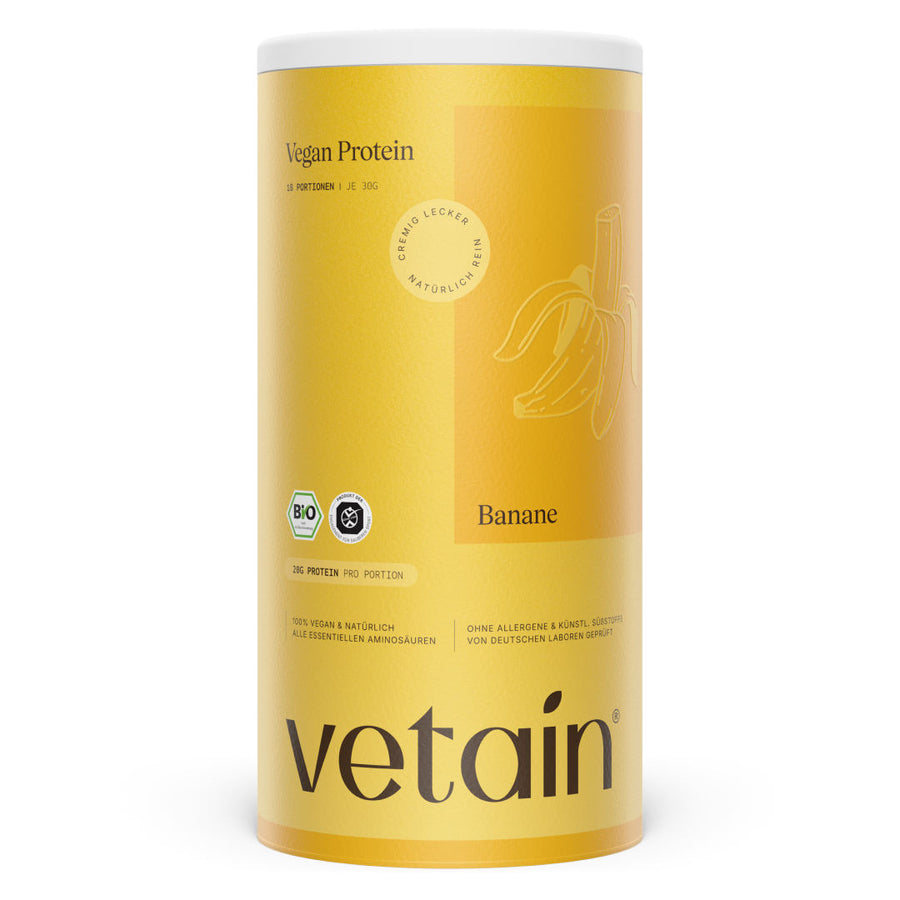
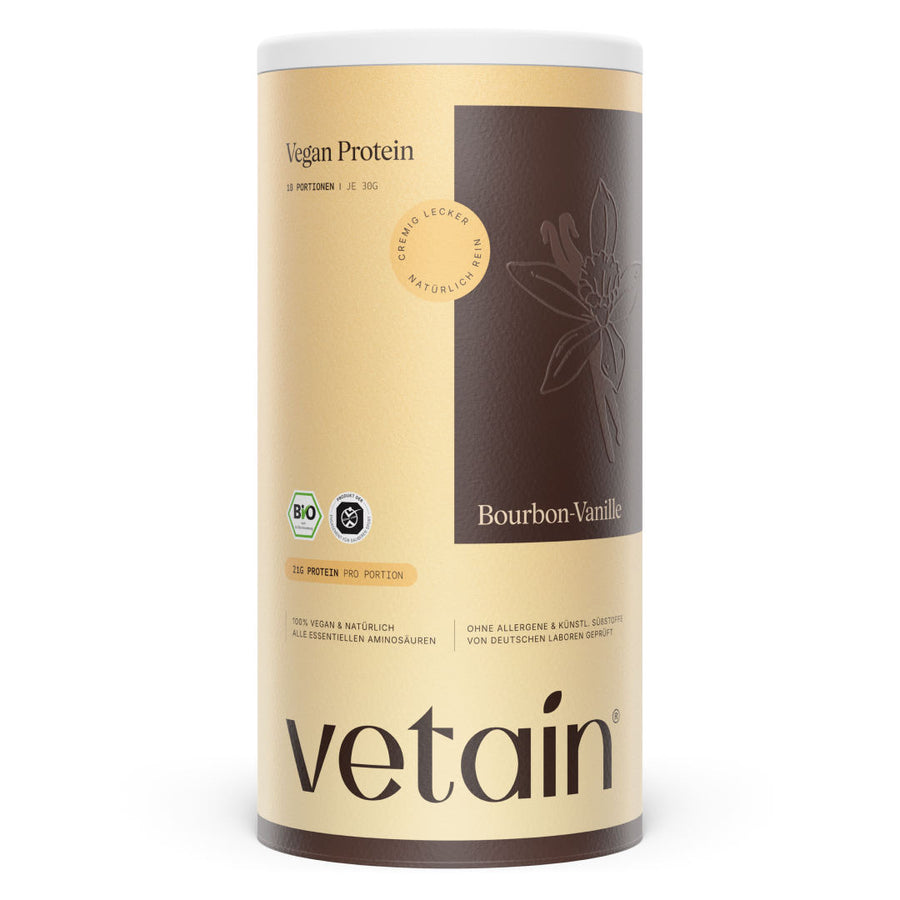
As a manufacturer of protein powders, Vetain also faced the decision at the beginning between the highest possible protein content and a fair and as light as possible plant-based protein powder. We found a good compromise: Our powders are vegan, without sucralose, harmoniously composed, and still contain a good portion of protein. Depending on the variety, our plant-based powders contain 60 - 75 g of protein per 100 g, while whey can reach about 80-90 g. But it's worth it to us, and if we want more protein, we simply drink a second shake or snack on a protein bar.
%-product_content-%
Which protein powder for lactose intolerance?
Lactose is also called milk sugar and is found in milk. Therefore, milk-based protein powders like whey often contain lactose. But here too, you have to look closely because some whey forms contain almost no lactose anymore due to heavy filtration. These include whey isolate and whey hydrolysate. These two forms contain so little residual lactose that they can actually be acceptable for many lactose-intolerant people. Unfortunately, you have to try for yourself how it works for you individually.
In general, lactose-containing protein powders should be avoided if you have lactose intolerance. A popular alternative is vegan protein powders. These contain 0% lactose and are therefore a popular option for lactose intolerance. And you don't have to worry about residual lactose, tablets & co.
Alternatively, lactase tablets can make a lactose-containing shake palatable for some.
A little reminder: When you prepare a shake, please remember that regular cow's milk also contains lactose. So use lactose-free milk, lactase tablets, or plant-based milk alternatives like oat milk. Otherwise, even the most lactose-free protein powder won't help you! ;)
Which vegan protein powder is the best?
While a few years ago vegan protein powders were not really great and more of a means to an end, there are now really good products on the market that actually taste good. Vetain has made it its goal to develop the best vegan protein powder.
If you...
-
you pay attention to a clean ingredient list without unnecessary additives
-
you like to bake or cook with protein powders
-
you find quality and origin more important than short-lived hype
-
you follow a vegan diet or value plant-based protein sources
-
you are sensitive to lactose or consciously avoid it
-
you do not want artificial sweeteners or exaggerated flavors
-
you want to integrate your protein regularly into everyday life – not just around training
-
you prefer a product that is honestly formulated and does not promise more than it delivers
... we can recommend the protein powders from Vetain.
%-split_content-%
Protein powders for different life situations & different goals
Which protein powder for weight loss?
If you want to lose weight and therefore like to eat and drink very consciously, you can look for a protein powder with a high protein content but relatively little sugar or fat. Light or clear protein powders are especially easy to integrate into everyday life and can be consumed on the side as a kind of protein soft drink. A calorie-conscious option is interesting here.
But please keep in mind that the protein powder alone does not determine whether you gain weight, maintain your weight, or lose weight!
Which protein powder during menopause?
Many women want to eat more consciously during menopause or switch to plant-based alternatives. The digestibility of a protein also becomes more important for many now. Try a plant-based protein powder with a good amino acid profile.
Which protein powder for muscle building?
In the gym, powders with a good amino acid profile, high protein content, and high leucine content are especially popular.
Which protein powder for women?
In theory, protein powders have no gender and are not classified as "suitable for men" and "suitable for women." However, women often appreciate a cleaner composition, a milder sweetness, "healthy" products, and versatile protein powders that can be consumed not only as shakes but also baked into muffins & co. Vetain's protein powder is suitable for this, for example.
Which protein powder for baking?
If you want to use your protein powder to bake high-protein muffins & co., you should definitely pay attention to a heat-stable protein powder. In the article "Can you heat protein powder?" we show you how to find a suitable powder.
Which protein powder tastes best?
Of course, this is very individual and depends on your preferences. If you like natural, authentic flavors and a mild sweetness, our Vetain Vegan Protein might be the best protein powder for you – feel free to try it out.
Also interesting:
How much protein powder can you take per day?
What does protein powder really do?
Conclusion
Which protein powder is right for you depends on your preferences, needs, and no-gos. While some are happy with a chocolate whey, others won't even touch whey protein powder. And while many appreciate vegan organic protein powders, others won't have any vegan product in their kitchen.
So just try out what feels right for you. The most important thing is: Trying a new protein powder is not a tattoo on your forehead that you have to keep for life. You can and should simply try something new – that's exactly why many brands offer small sample packs. Most manufacturers like Vetain are also happy to give tips on preparation and tell you how the powder tastes best. Because: The manufacturers know their product very well and have often tried every possible combination.
Have fun testing and maybe you'd like to let us know which protein powder is the best for you.
Do you have questions? Then feel free to send me an email – I look forward to hearing from you! :)
The information shared in this article does not replace individual medical or nutritional advice.