






 8 Min
 Zuletzt aktualisiert am 19.10.2026

You’ve probably already heard that omega-3 fatty acids are important for your body, and maybe you’ve wondered: What exactly is omega-3 good for?
The problem is that the internet is full of half-truths and myths. Everything from “not relevant” to “miracle cure” is out there. It can be confusing.
In this article, you’ll get a clear overview: what omega-3 fatty acids actually do in the body, what studies say, and what role omega-3 plays for women. No exaggerations or false promises - just solid research and a clear look at what we currently know.
Your quick guide: What is omega-3 good for?
-
Omega-3 is involved in many different structures and processes in the body - from cell membranes to signal transmission.
-
Omega-3 is especially relevant for the brain, eyes and vision, as well as the heart.
-
Studies are also investigating potential effects on the skin, a possible anti-inflammatory effect , and more.
-
Omega-3 is especially important for women - particularly during pregnancy.
-
You can get it from foods such as fish or flaxseeds - or from dietary supplements such as Omega-3 capsules.
Omega-3 benefits - your list
You’ll read a lot about ALA, EPA, and DHA here. These are three important omega-3 fatty acids. EPA and DHA are biologically active long-chain omega-3 fatty acids, while ALA is only partially converted into EPA and DHA in the body. So when people ask what omega-3 is good for, these three are always mentioned.
The officially confirmed effects:
-
Brain: DHA contributes to maintaining normal brain function.*
-
Eyes: DHA contributes to maintaining normal vision.*
-
Heart: EPA and DHA contribute to normal heart function.**
-
Blood pressure: DHA and EPA contribute to maintaining normal blood pressure***
-
Blood lipids: DHA and EPA contribute to maintaining normal blood triglyceride levels.
-
Cholesterol: ALA contributes to maintaining normal blood cholesterol levels.
*Positive effect with 250 mg DHA daily.
**at 250 mg daily
***at 3 g daily
%-product_content-%
Let's take a look at the individual areas to better understand what Omega 3 is good for:
Omega 3 & brain
DHA contributes to the maintenance of normal brain function. This applies with 250 mg of DHA daily.
But what exactly does that mean? What is Omega 3 good for? It means that normal brain function is maintained. So it doesn't mean that an extra dose of Omega 3 will suddenly make you learn twice as fast or speak a new language in a few days. Instead, it's more like a good foundation.
Omega 3 & eyes
What is Omega 3 good for when it comes to the eyes? The Omega 3 fatty acid DHA contributes to the maintenance of normal vision.
The same applies here: Unfortunately, Omega 3 capsules won't get rid of your glasses. But DHA is a major component of the retina and is essential for normal vision. So if you're getting enough of it, you've built a good foundation.
Omega 3 & heart
EPA and DHA contribute to normal heart function and therefore affect the cardiovascular system.
Important: Recently, news reports said that Omega 3 capsules can cause heart problems such as atrial fibrillation. This understandably caused many people to panic. The good news is that one detail was overlooked: the warning actually only applies to very high doses, which you won't get from eating fish normally or taking standard Omega 3 supplements. So a normal dose of Omega 3 is safe for most of us and even very important. If you're unsure, feel free to ask your doctor for advice - it never hurts!
Back to “What is Omega 3 good for?”
Omega 3 & blood pressure
The fatty acids DHA and EPA contribute to maintaining normal blood pressure.
Ideally, an adult's blood pressure at rest is 120/80 mmHg. Omega 3 can help maintain normal levels.
That's why people often say that fish rich in Omega 3 is “good for blood pressure.”
Important: If you have high blood pressure, do not simply stop taking your medication and supplement with omega-3 instead! In such cases, always consult your doctor, as they know exactly what omega-3 is good for and whether it is a suitable choice for you.
Omega-3 & blood levels
Omega-3 fatty acids are also linked to your blood levels: DHA and EPA contribute to the maintenance of normal blood triglyceride levels. In addition, ALA (alpha-linolenic acid) contributes to the maintenance of normal blood cholesterol levels.
Cholesterol in particular is a kind of horror word for many people. That’s because high cholesterol levels are a risk factor for various diseases. Since omega-3 helps keep these levels within a normal range, adequate intake (article: How much omega-3 per day?) may be especially relevant for people who want to monitor their blood lipid levels.
So when asking “What is omega-3 good for?”, you should also consider these kinds of interactions.
What else is omega-3 good for? An overview of current omega-3 studies
Alongside these officially confirmed effects, studies have revealed further findings that cannot yet be communicated as so-called health claims. However, they show the direction research is taking and offer hope for more.
Here are some interesting studies on omega-3 and specific areas:
-
Omega-3 & hair: One study examined the effects of omega-3 and omega-6 fatty acids, as well as antioxidants, on hair growth.
-
Omega-3 & skin: Observational studies are investigating the link between omega-3 deficiency and dry skin. More recent research is also focusing on the skin microbiome.
-
Omega-3 & mental health: People often ask whether omega-3 affects mental health. Since DHA is an important component of neuronal communication, a link with mood and mental well-being is being discussed.
-
Omega-3 & inflammation: According to studies, omega-3 fatty acids can balance pro-inflammatory omega-6 eicosanoids and produce so-called resolvins and protectins, which may help resolve inflammatory processes.
If you’d like to read the studies yourself, you can find them in our sources!
What is omega-3 good for in women?
Women particularly benefit from getting enough omega-3. Omega-3 is an important companion not only during pregnancy and breastfeeding, but also in every woman’s everyday life. After all, hormones play a major role for women, and omega-3 fatty acids play a role in various signaling processes in the body. Omega-3 is also popular with many women during menopause, when hot flashes and similar symptoms are a concern.
What about pregnancy and breastfeeding? What is omega-3 good for?
Pregnancy & Breastfeeding – What Is Omega-3 Good For?
Omega-3 fatty acids, especially EPA and DHA, contribute to normal heart function, the maintenance of normal brain function and the maintenance of normal vision. Maternal intake of DHA contributes to the normal development of the brain and eyes of the fetus and breastfed infant (an additional 200 mg of DHA daily).
Women who don’t eat fatty fish such as salmon, mackerel or herring at least once or twice a week are often advised to take supplements. This also applies to vegans, who can use algae oil as a source of omega-3.
How can you get omega-3?
So, you can now confidently answer the question “What is omega-3 good for?” Now for the next question: where do we get these fatty acids?
There are two main ways to supply your body with omega-3 fatty acids – and remember: EPA and DHA are what we need most!
About your diet: The best sources of EPA and DHA are fatty fish such as salmon, mackerel and herring. Plant-based sources such as flaxseeds, chia seeds, walnuts and rapeseed mainly provide ALA (alpha-linolenic acid).
For anyone following a vegan diet, algae are an interesting alternative. Algae oil provides EPA and DHA directly, without going through fish. This helps protect fish stocks – and algae oil is generally free from pollutants that can accumulate in fish.
About dietary supplements: If you can’t or don’t want to get all the nutrients you need from food, omega-3 capsules can be a convenient supplement. If you’re not sure yet which supplement is right for you, you can read more in our article Algae Oil vs. Fish Oil.
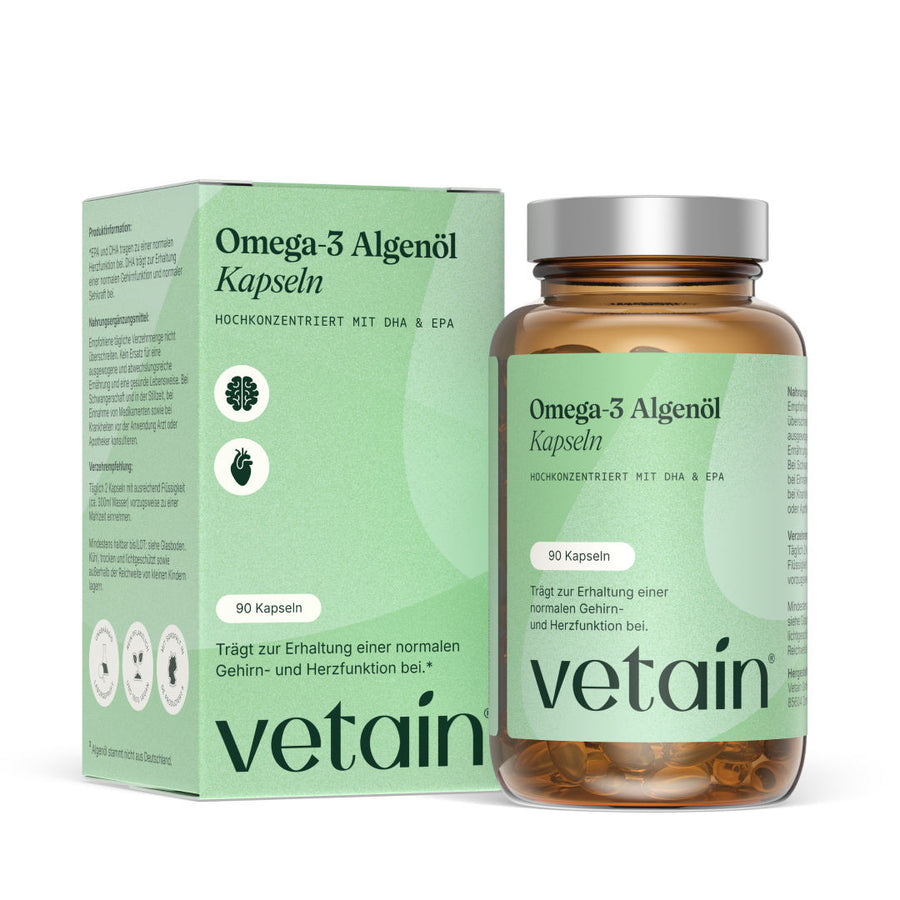
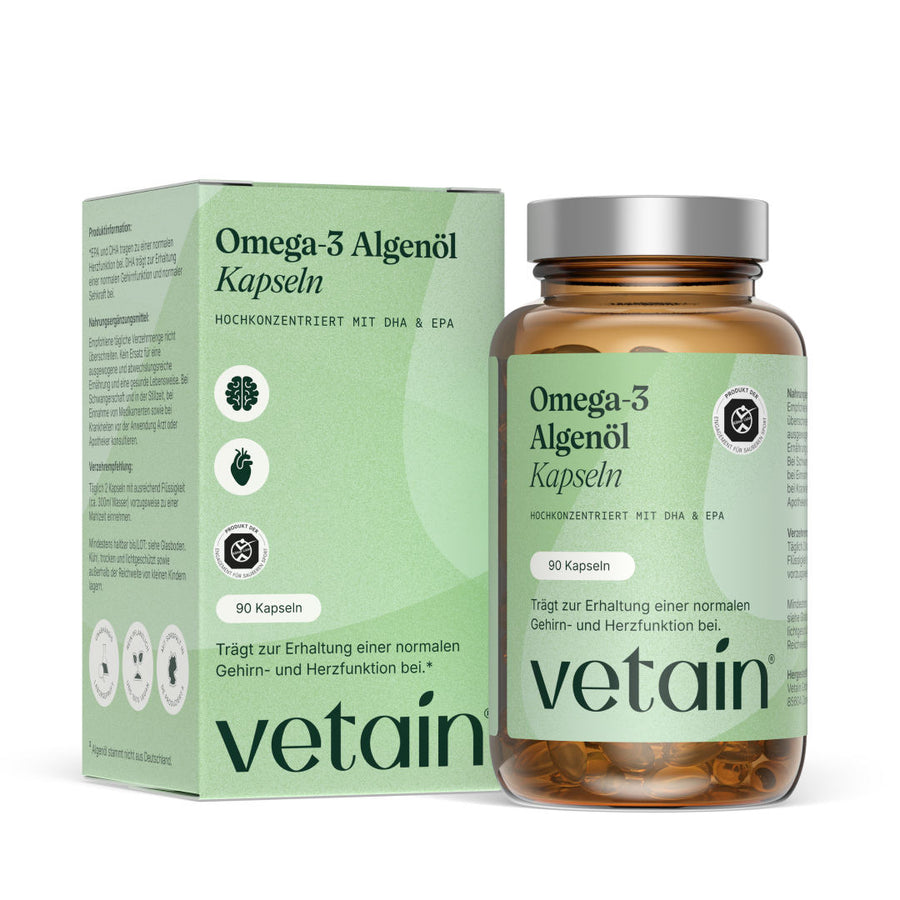
Our recommendation for omega-3 supplementation: Vetain algae oil capsules – also suitable for vegetarians and vegans.
%-split_content-%
By the way: We have a detailed article about omega-3 sources, where you can learn even more about common omega-3 foods.
Conclusion
What is omega-3 good for? The answer is multifaceted: From normal brain function and eyesight to the cardiovascular system, these fatty acids play an important role in your body. A good omega-3 intake can be relevant especially for women – whether in everyday life, during the menstrual cycle, menopause, pregnancy, or breastfeeding.
Let’s be honest: Omega-3 is no miracle cure. But it is an important part of your diet – and perhaps also a chance to try out a few new supplements! ;)
Have questions? Feel free to send me an email – I look forward to hearing from you! :)
The information shared in this article is not a substitute for personalized medical or nutritional advice. If you have any concerns, always talk to your doctor.
Literature & Sources
-
EFSA Panel on Dietetic Products, Nutrition and Allergies (2010). Scientific Opinion on the substantiation of health claims related to EPA, DHA, DPA and maintenance of normal blood pressure. EFSA Journal.
-
Harris, W.S. et al. (2017). The Omega-3 Index and relative risk for coronary heart disease mortality: Estimation from 10 cohort studies. Atherosclerosis, 262.
-
Calder, P.C. (2015). Marine omega-3 fatty acids and inflammatory processes: Effects, mechanisms and clinical relevance. Biochimica et Biophysica Acta, 1851(4).
-
Le Floc’h, C. et al. (2015). Effect of a nutritional supplement on hair loss in women. Journal of Cosmetic Dermatology, 14(1).
-
Grosso, G. et al. (2022). Omega-3 fatty acids and depression: Scientific evidence and biological mechanisms. Oxidative Medicine and Cellular Longevity.
-
DO-HEALTH Trial (2020). Effects of Vitamin D3, Omega-3s, and Exercise on Healthy Aging. The Lancet Healthy Longevity.
-
German Nutrition Society (DGE). Reference Values for Nutrient Intake: Fat.
In forums, you’ll find many personal accounts on the topic: What is omega-3 good for? So if you’re interested in what others have to say about what omega-3 is good for, forums like these are a real treasure trove.